
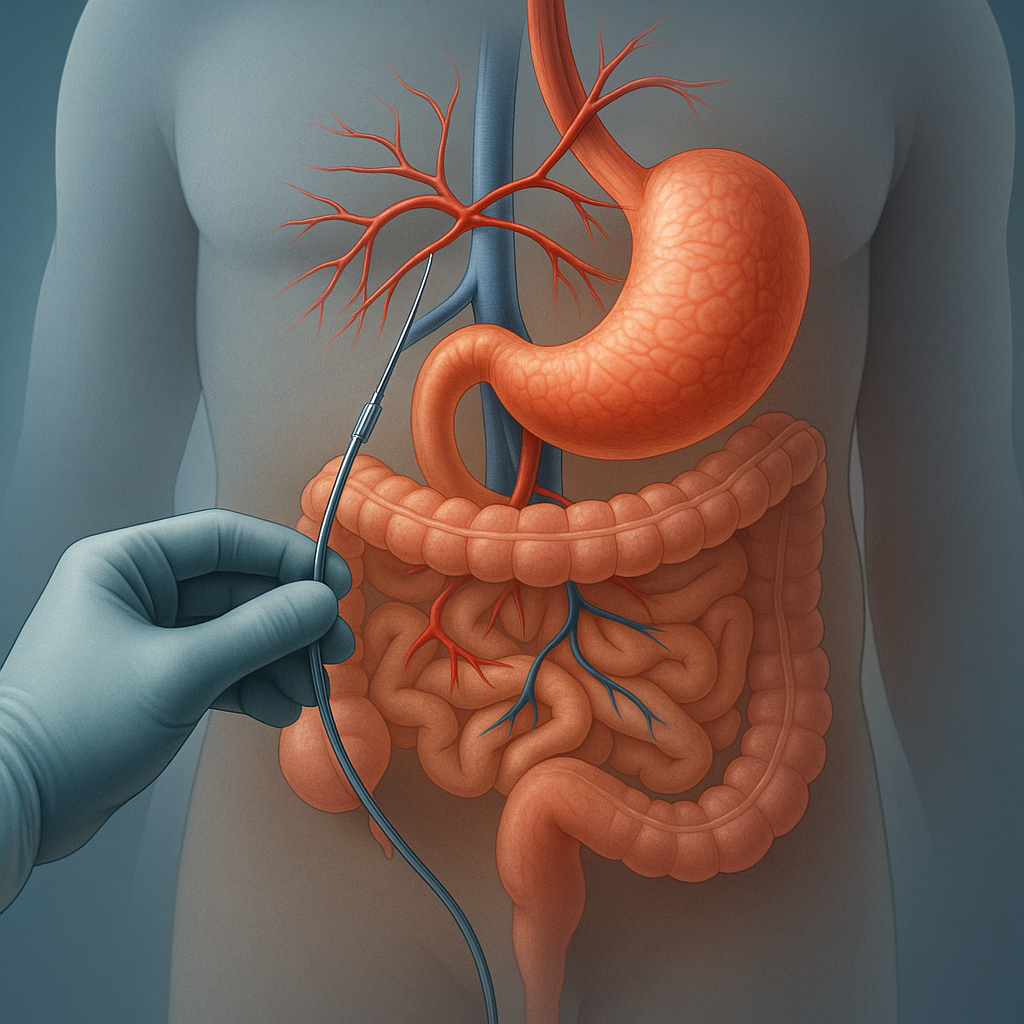
A Precise, Non-Surgical Approach to Weight Loss
Bariatric embolization — also known as the Hunger Block™ Procedure — is performed by interventional radiologists, physicians trained to treat conditions inside the body using image guidance and microcatheters rather than scalpels. It’s designed for people who need another option between medication and major surgery.
During the procedure, a thin catheter is inserted through a tiny puncture in the wrist or groin. Using real-time X-ray imaging, the physician navigates to the left gastric artery, which supplies the upper stomach where ghrelin is made. Once positioned, the doctor releases microscopic beads to slow blood flow in this region. Less blood flow means less ghrelin production — and that means fewer intense hunger signals.
The Experience: Fast, Safe, and Minimally Invasive
The entire process typically takes about an hour, and patients are awake but relaxed. Most go home the same day. Side effects are mild — temporary nausea or discomfort — and usually resolve within a few days.
Within weeks, patients notice reduced appetite and improved control over cravings. In clinical studies, people lost 6–8% of their total body weight in the first few months, often with continued loss afterward.
The Future of Fat Loss Medicine
Bariatric embolization is not a replacement for healthy habits — it’s a catalyst that makes sustainable change achievable. As more research confirms its long-term safety and effectiveness, it’s becoming one of the most promising new tools in the fight against obesity.
It’s quick. It’s minimally invasive. And it’s changing lives — one patient at a time.
Would you like me to generate the three blog header images (each in a flat, professional style matching medical site branding — 1200×675 px, web-optimized)?
I can create those next with consistent typography and visuals (e.g., teal/blue clinical color scheme, modern sans-serif, subtle anatomy outlines).

